
loader image

TPM Consultant in Mumbai

Organizations have dedicated maintenance and support departments, primarily responsible for ensuring all equipment operates at peak capacity. However, when maintenance remains the job of just one department, breakdowns, slow running, and unplanned downtime continue to chip away at productivity. This is exactly where TPM in business brings about a paradigm shift — redefining how equipment is handled and maintained across every level of the organization, from top management down to machine operators.

Unlike reactive repair cycles, Total Productive Maintenance embeds ownership into daily operations, targeting Zero Breakdowns, Zero Defects, and Zero Accidents. For manufacturing businesses in Maharashtra’s industrial corridor, working with specialist TPM Consultants in Mumbai is the most structured path to building a system that actually sustains results on the shop floor.

tpm consultants in mumbai

What exactly is TPM in Lean Six Sigma?

  • Total Productive Maintenance (TPM) is a product maintenance strategy that advocates that everyone should participate in maintenance beyond just the maintenance department. TPM strategy uses all employees’ skill sets and aims to integrate maintenance tasks into an organization’s daily operations.
     
  • In other words, TPM lean manufacturing is a holistic approach to equipment maintenance that strives to achieve perfect production with the following:
    • ZERO Breakdowns
    • No Small Stops or Slow Running versus rated capacity
    • ZERO Defects
    • ZERO Accidents

How will ARROWHEAD TPM Consultant Help Your Organization’s Management?

Frequently Asked Question

What is Total Productive Maintenance (TPM)?

TPM is a comprehensive approach to equipment maintenance where everyone — from operators to top management — participates. The goal is zero breakdowns, zero defects, no small stops or slow running, and zero accidents.

TPM integrates proactive and preventive maintenance into daily operations, maximising equipment effectiveness, reducing unplanned downtime, and improving overall output quality.

TPM can be adapted for service sectors by broadening "equipment" to include IT systems, human resources, and critical processes — with the same goal of maximising their effectiveness and reducing disruption.


Most companies see a 20–25% increase in equipment efficiency within two years. Implementation follows five steps: identify a pilot area, restore equipment to prime condition, measure OEE, reduce major losses, then implement planned maintenance and expand.

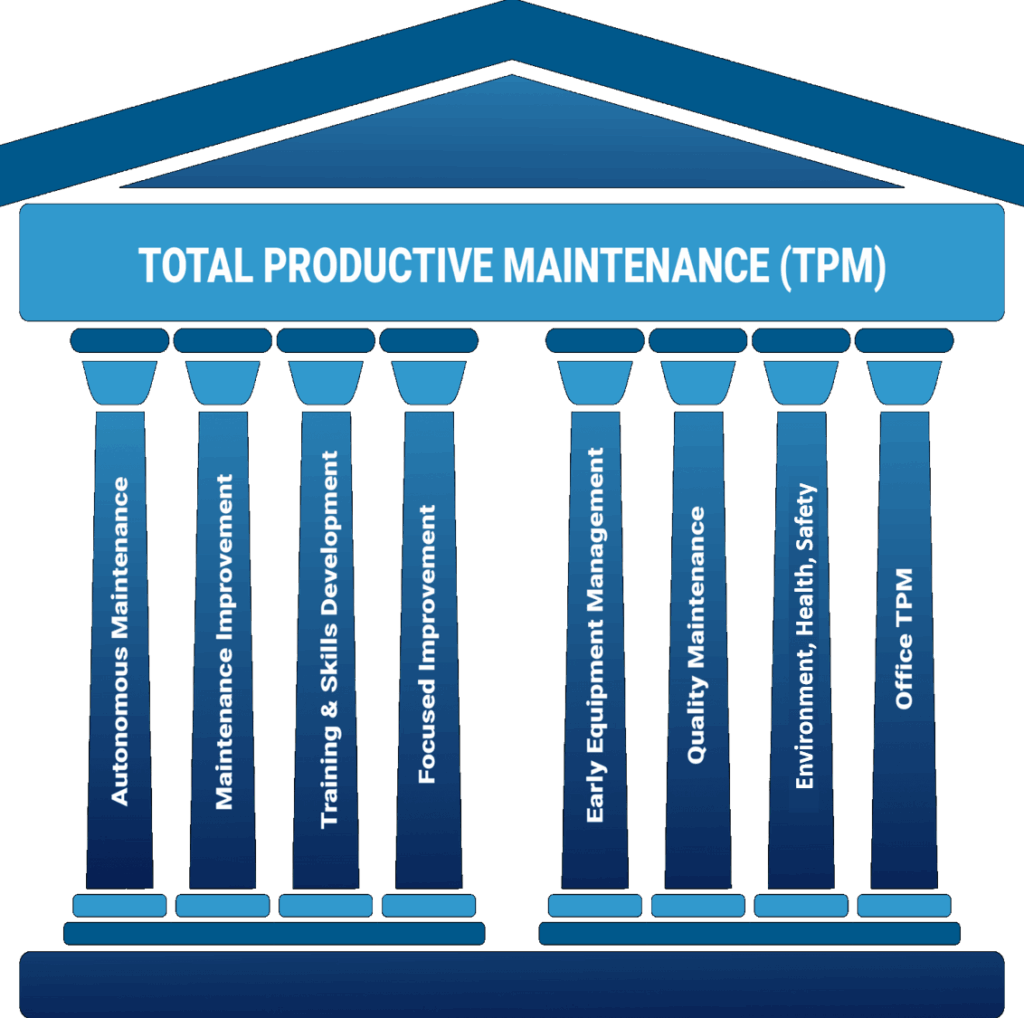
Yes. Two workshop models are available — Basic (1 day): introduces TPM concepts and all 8 pillars, suitable for operators and maintenance staff. Detailed (4 days): covers all 8 pillars in depth with an implementation roadmap, including Kobetsu Kaizen for reducing unplanned breakdowns. All attendees receive a certificate of participation.

Request a callback