
Introduction – Improvement Is Easy. Sustaining It Is the Real Challenge
Most organisations today are not short of improvement initiatives.
- They launch transformation programs.
- They introduce dashboards.
- They run Lean Six Sigma workshops.
- They identify inefficiencies and redesign processes.
For a while, performance improves.
- Meetings become sharper.
- Teams become more aware.
- Metrics begin to move in the right direction.
And then, slowly, things begin to slip back.
- Old habits return.
- Escalations increase.
- Processes become inconsistent again.
- Firefighting resumes.
At this point, leadership often assumes:
- The methodology failed
- The tools were ineffective
- The teams resisted change
But the real issue is usually something deeper:
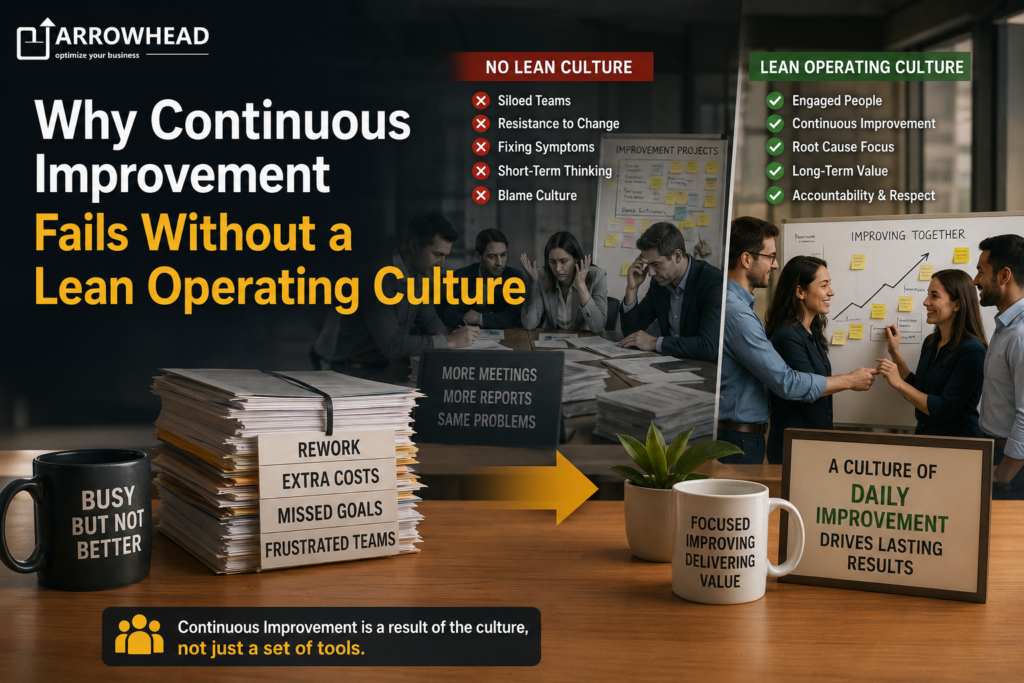
Continuous improvement cannot survive without a Lean operating culture.
This is one of the most misunderstood realities in operational excellence.
Organisations often focus heavily on projects, tools, and frameworks, but underestimate the importance of the operating culture that must support them every single day.
At ARROWHEAD Consulting, this distinction is central to how transformation is approached. As an experienced Lean consultant in India and a trusted partner for organisations pursuing Lean Six Sigma excellence, ARROWHEAD believes sustainable performance is never created by isolated projects alone. It is created by building systems, behaviours, and leadership practices that continuously reinforce improvement.
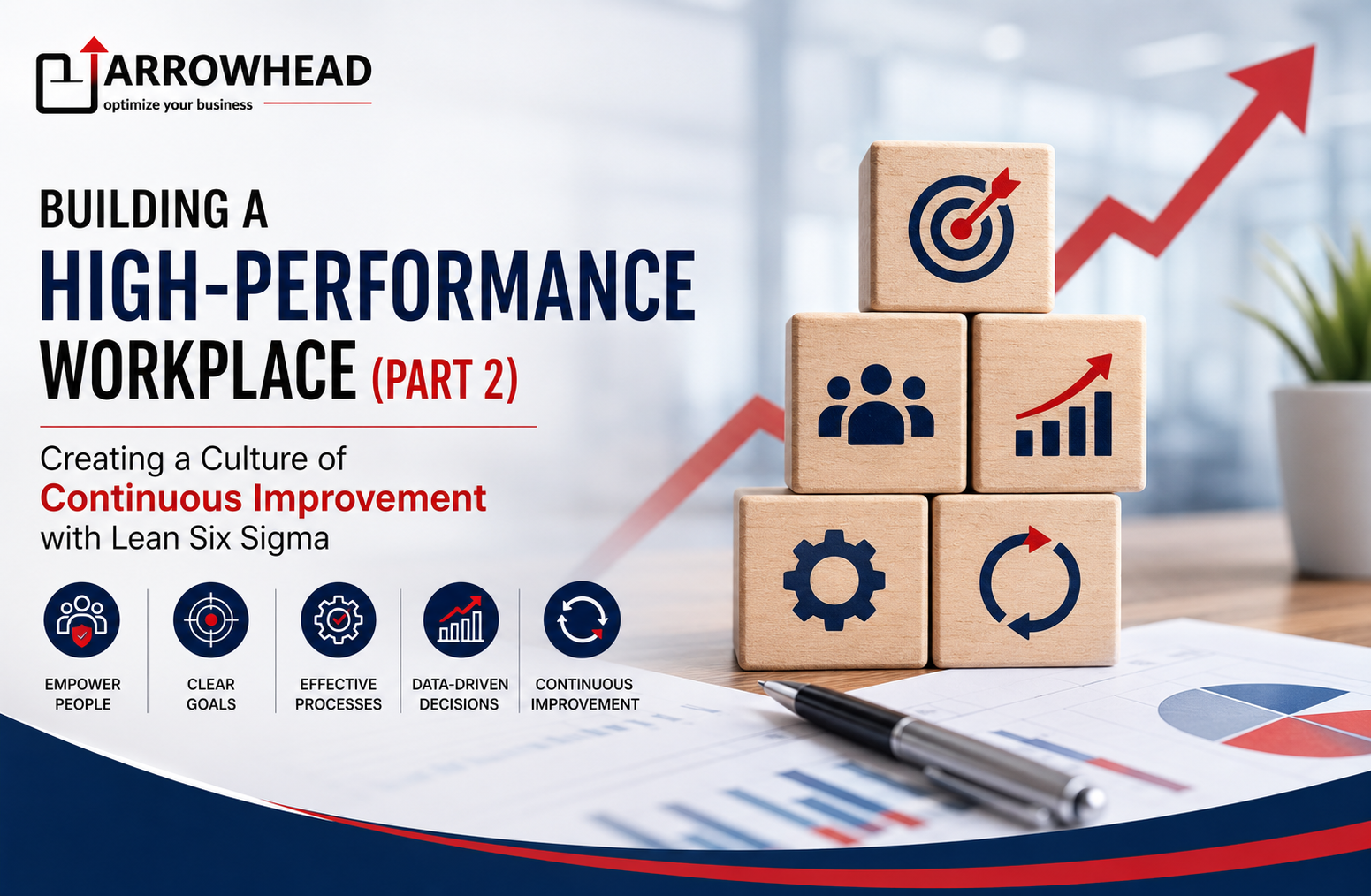
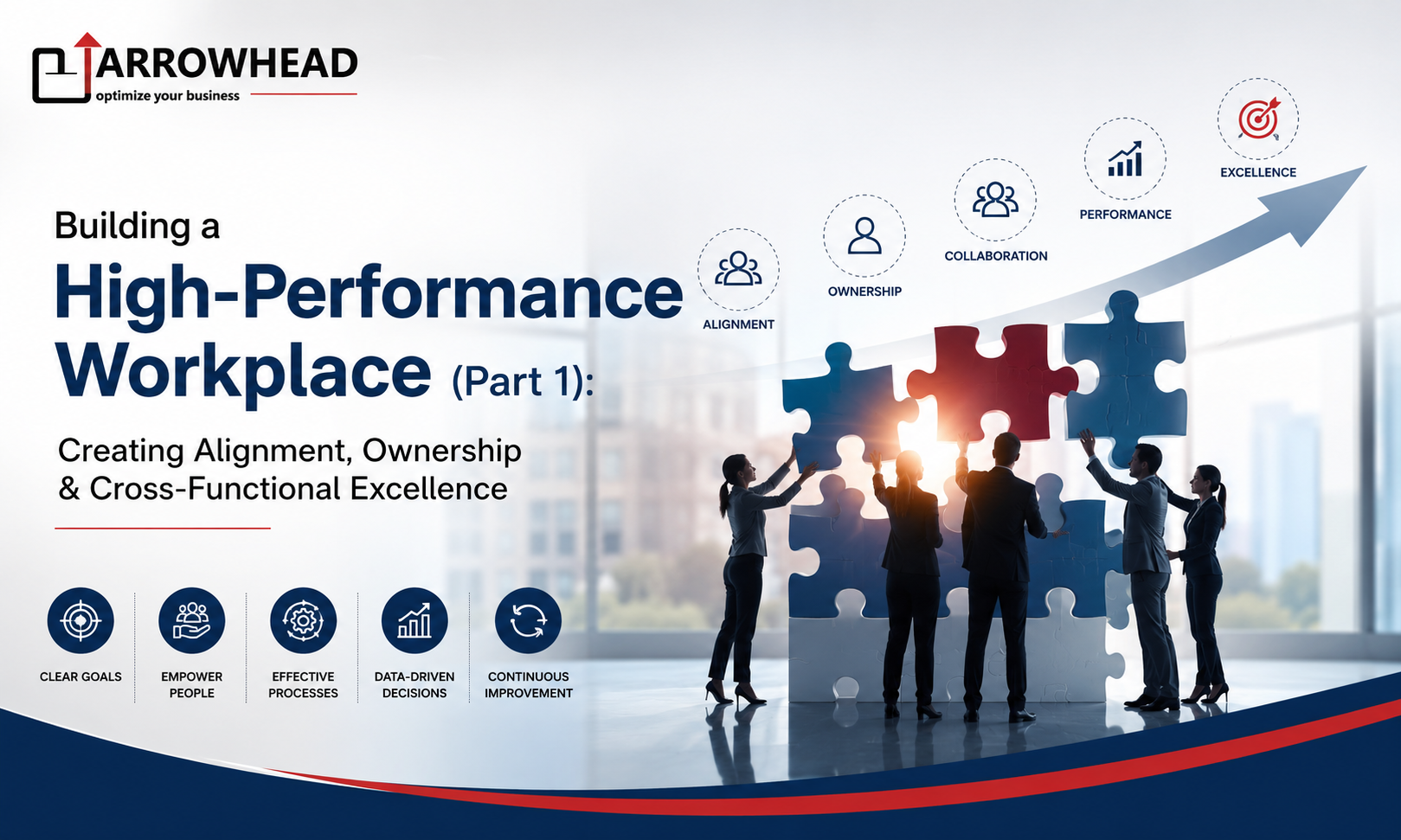
This blog explores why continuous improvement efforts fail in many organisations, what defines a true Lean operating culture, and how businesses can build environments where improvement becomes part of everyday work rather than a temporary initiative.
The Misconception About Continuous Improvement
Many organisations treat continuous improvement as an activity.
Something teams do:
- During workshops
- During quarterly initiatives
- During transformation drives
But high-performing organisations understand something fundamentally different:
Continuous improvement is not an activity. It is an operating philosophy.
The difference matters enormously.
When improvement is treated as a project:
- Momentum depends on leadership attention
- Teams wait for direction
- Change feels temporary
When improvement becomes culture:
- Problems are surfaced naturally
- Teams take ownership
- Learning becomes continuous
- Performance improves consistently
This is where Lean thinking becomes far more powerful than simply applying isolated Six Sigma tools.
At ARROWHEAD Consulting, Lean Six Sigma is approached as a way of operating, not just a collection of analytical techniques.
Why Improvement Efforts Lose Momentum
Most organisations genuinely want to improve. The intention is rarely the problem.
The challenge is that improvement often exists outside the normal operating system.
For example:
Teams attend Lean Six Sigma training, but daily work remains unchanged
Improvement projects are completed, but routines stay reactive
Dashboards are created, but decisions are still driven by hierarchy instead of data
As a result:
Improvements become disconnected from daily execution
People revert to familiar habits under pressure
Operational discipline weakens over time
Organisations working with a skilled Lean consultant in India often realise that sustainable improvement is less about introducing new tools and more about redesigning how work is managed every day.
What Is a Lean Operating Culture?
A Lean operating culture is not defined by:
Posters on walls
- Improvement terminology
- Occasional Kaizen events
It is defined by how the organisation behaves consistently under normal pressure and in the face of disruption.
A Lean operating culture includes:
1. Visibility of Problems
Problems are surfaced early, not hidden.
2. Structured Decision-Making
Data drives action instead of assumptions or hierarchy.
3. Ownership at Every Level
Teams do not wait for escalation to solve issues.
4. Cross-Functional Collaboration
Departments optimise the whole system, not just local performance.
5. Continuous Learning
Mistakes become opportunities for improvement instead of blame.
6. Operational Discipline
Standards are followed consistently, reviewed regularly, and improved continuously.
This is the foundation of sustainable operational excellence.
Why Lean Culture Matters More Today Than Ever
Modern organisations operate in environments defined by:
- Speed
- Complexity
- Uncertainty
- Constant change
Under these conditions, organisations cannot rely only on:
- Leadership intervention
- Heroics
- Reactive problem-solving
They need systems that create:
- Stability
- Alignment
- Predictability
This is where Lean operating culture becomes critical.
Without a strong Lean culture:
- AI insights are ignored
- Dashboards create noise instead of action
- Transformation initiatives become fragmented
- Departments operate in silos
At ARROWHEAD Consulting, Lean Six Sigma is always positioned within this broader operational context, where process discipline supports agility rather than bureaucracy.
The Difference Between Tool Adoption and Cultural Adoption
One of the biggest reasons improvement fails is that organisations adopt tools without changing behaviours.
For example:
Visual boards exist, but teams don’t use them meaningfully
Root cause templates are filled mechanically
Daily reviews happen, but no real accountability exists
This creates the illusion of improvement without real operational maturity.
A Lean operating culture changes:
- How meetings happen
- How leaders ask questions
- How teams respond to problems
- How decisions are made
This is far more difficult, and far more valuable, than simply implementing tools.
Why Leadership Behaviour Determines Improvement Sustainability
Culture follows leadership behaviour.
- Not leadership speeches.
- Not leadership presentations.
- Leadership behavior.
Teams observe:
- What leaders prioritize
- What leaders tolerate
- What leaders measure
- How leaders respond to problems
If leaders:
- React emotionally to bad news
- Reward firefighting
- Ignore process discipline
- Prioritise short-term output over sustainable flow
Then, the improvement culture weakens quickly.
High performing Lean organisations behave differently.
Their leaders:
- Encourage transparency
- Focus on root causes
- Reinforce standardization
- Create psychological safety for improvement discussions
This leadership alignment is one of the most important areas ARROWHEAD Consulting works on during Lean Six Sigma transformations.
Why Cross-Functional Alignment Is Essential
Continuous improvement often fails because departments improve locally but not systemically.
For example:
Procurement optimises cost while operations struggle with delays
Production maximises output while quality issues increase
Sales pushes demand without operational alignment
Each department appears efficient on its own, but organisational performance suffers collectively.
A Lean operating culture focuses on:
- End-to-end value flow
- Shared goals
- Collaborative problem-solving
This systems-thinking approach is what differentiates mature Lean organisations from organisations running isolated improvement projects.
The Hidden Damage of Firefighting Cultures
Many organisations unintentionally reward firefighting.
People who solve crises quickly are seen as heroes.
But over time:
- Root causes remain unresolved
- Instability becomes normal
- Teams become exhausted
- Long-term improvement slows down
Lean culture shifts organisations from:
Reactive behavior
to
Preventive thinking
Instead of asking:
“Who can fix this quickly?”
Lean organisations ask:
“Why did this happen, and how do we prevent recurrence?”
This shift is one of the most powerful outcomes of a strong Lean Six Sigma culture.
How Lean Operating Culture Changes Decision-Making
Organisations with a weak operating culture often make decisions:
- Reactively
- Emotionally
- Based on hierarchy
Lean cultures create structured decision-making by:
- Using data consistently
- Making performance visible
- Clarifying ownership
- Standardising escalation paths
This creates:
- Faster decisions
- Lower ambiguity
- Better coordination
At ARROWHEAD Consulting, this operational clarity is considered one of the most important drivers of long-term performance.
The Role of Lean Six Sigma in Building Culture
Lean Six Sigma is most powerful when it is used not just for improvement projects, but for shaping organisational behaviour.
Lean provides:
- Flow
- Visibility
- Simplicity
- Operational rhythm
Six Sigma provides:
- Analytical discipline
- Structured problem-solving
- Data-based validation
Together, Lean Six Sigma creates:
- Operational stability
- Process reliability
- Continuous learning
But only when embedded into culture.
This is why ARROWHEAD Consulting positions Lean Six Sigma as an operating philosophy rather than a standalone improvement methodology.
What High-Performing Lean Organizations Do Differently
Organisations with strong Lean operating cultures consistently demonstrate several behaviours:
1. Problems Are Discussed Openly
Issues are surfaced early without fear.
2. Daily Management Is Structured
Teams review performance consistently.
3. Improvements Are Embedded Into Work
Continuous improvement is part of normal operations.
4. Leaders Focus on Systems
Not just individual performance.
5. Data Is Used for Learning
Not to blame.
This creates environments where improvement becomes sustainable.
The ARROWHEAD Consulting Approach to Lean Culture Building
ARROWHEAD Consulting focuses on building operational cultures that sustain performance long after projects are completed.
The approach includes:
1. Designing Lean Operating Systems
Creating structured management rhythms.
2. Building Leadership Alignment
Ensuring leaders reinforce the right behaviours.
3. Improving Cross-Functional Collaboration
Aligning departments around value streams.
4. Embedding Lean Six Sigma Thinking
Making problem-solving part of daily work.
5. Creating Sustainable Governance
Ensuring improvements continue over time.
As a trusted Lean consultant in India, ARROWHEAD helps organisations move beyond temporary transformation efforts toward lasting operational maturity.
Why Technology Alone Cannot Create Continuous Improvement
Many organisations believe digital tools will automatically create operational excellence.
Technology can improve:
- Visibility
- Speed
- Access to information
But technology cannot create:
- Accountability
- Discipline
- Ownership
- Collaboration
Without a Lean operating culture:
- Dashboards become passive
- AI insights go unused
- Systems become fragmented
Operational excellence remains fundamentally human.
Conclusion – Improvement Survives Only When Culture Supports It
Continuous improvement does not fail because Lean Six Sigma is ineffective.
It fails because organisations try to improve processes without improving the operating culture surrounding those processes.
Sustainable excellence requires:
- Disciplined systems
- Aligned leadership
- Collaborative behaviors
- Structured decision-making
- Continuous learning
At ARROWHEAD Consulting, Lean Six Sigma is never viewed as just a toolkit for improvement projects.
It is viewed as a foundation for building organisations that:
- Learn continuously
- Execute consistently
- Improve sustainably
Because in the end, operational excellence is not created by isolated initiatives.
It is created by cultures in which improvement becomes part of how the organisation thinks, works, and leads every single day.