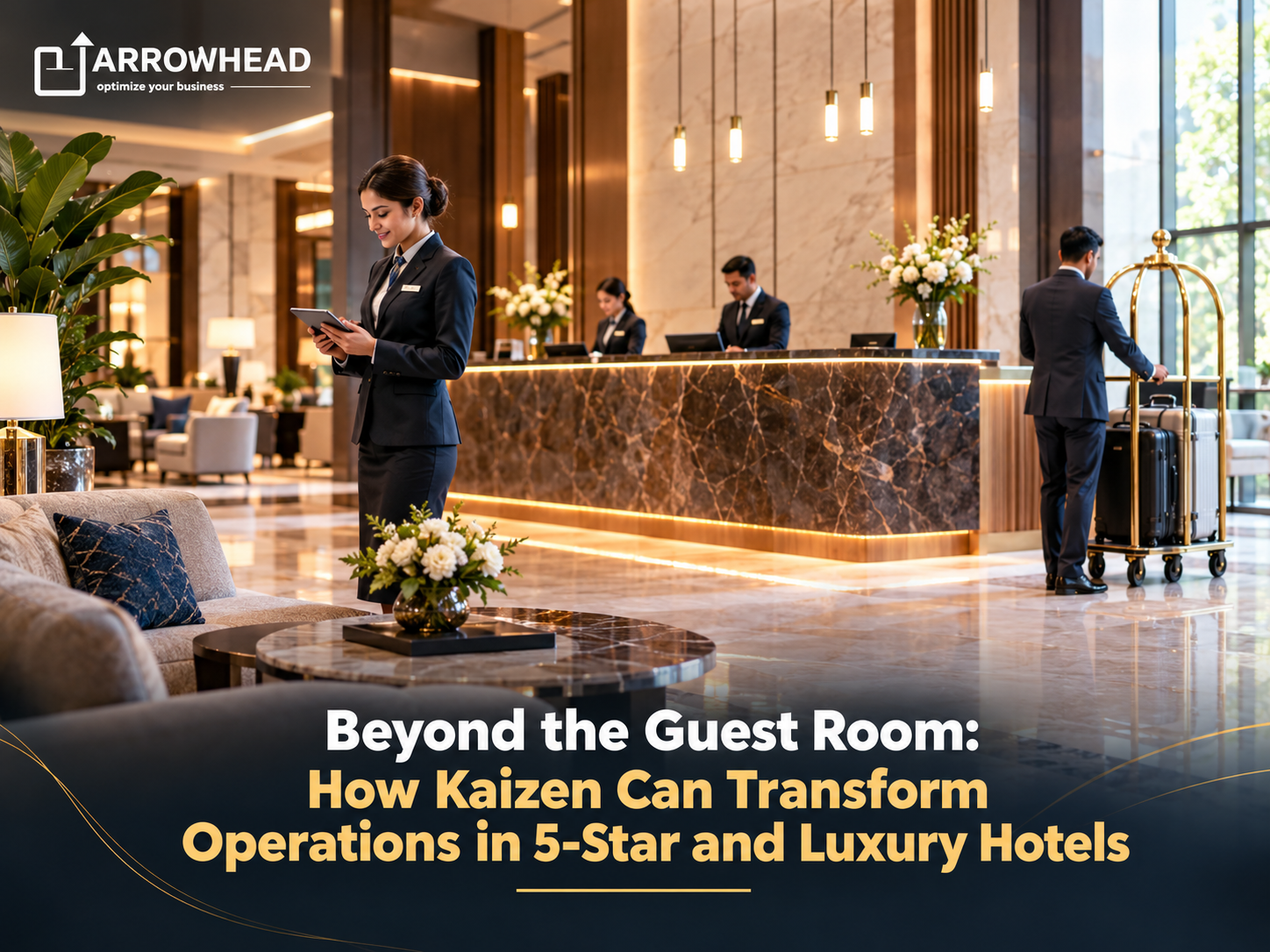

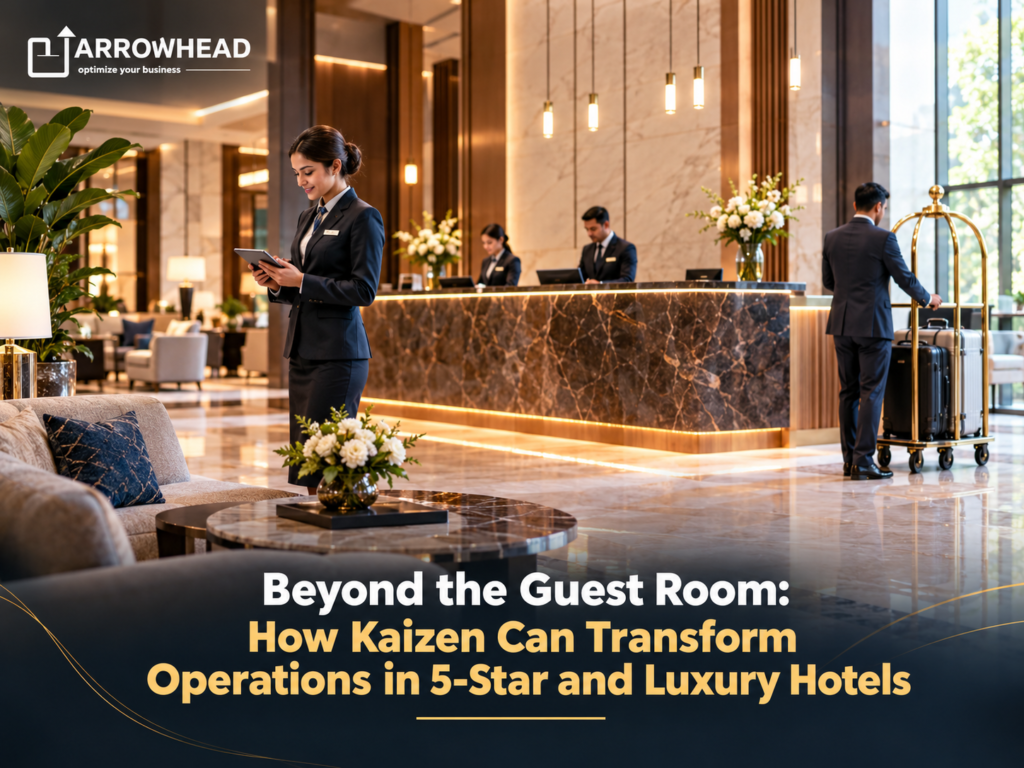
A five-star hotel is much more than a place to sleep. It may have fine-dining restaurants, cafés, luxury spas, swimming pools, tennis courts, golf facilities, sightseeing experiences, entertainment venues, and dedicated spaces for children. Each facility contributes to the guest experience, but each also comes with its own operational demands, costs and challenges.
Managing all these services under one roof is no small task. A restaurant must maintain food quality while controlling waste. A spa needs to coordinate appointments, therapists and equipment. Sports facilities require careful scheduling and maintenance. Concierge teams must coordinate guest activities without creating delays or confusion.
So, how can a luxury hotel improve efficiency across all these areas without compromising the experience that guests expect?
One answer is Kaizen, the philosophy of continuous improvement.
The idea behind Kaizen in the hospitality industry is not to make luxury feel less luxurious. It is to make the processes behind that experience work better, consistently and sustainably.
One Hotel, Multiple Cost Centres
Every department in a luxury hotel operates differently, but they all contribute to the property’s overall performance.
Restaurants manage ingredients, kitchen operations, staffing and service. Spas coordinate treatments, products, appointments and therapists. Golf courses and tennis facilities require equipment, trained personnel, maintenance, and scheduling. Excursions, shows, and childcare services require coordination, safety, and guest communication.
Each activity has costs that may not always be immediately visible. Food spoilage, unused appointment slots, poorly coordinated staff schedules, equipment downtime and repeated administrative work can gradually affect profitability.
The challenge is that these inefficiencies often remain hidden within individual departments.
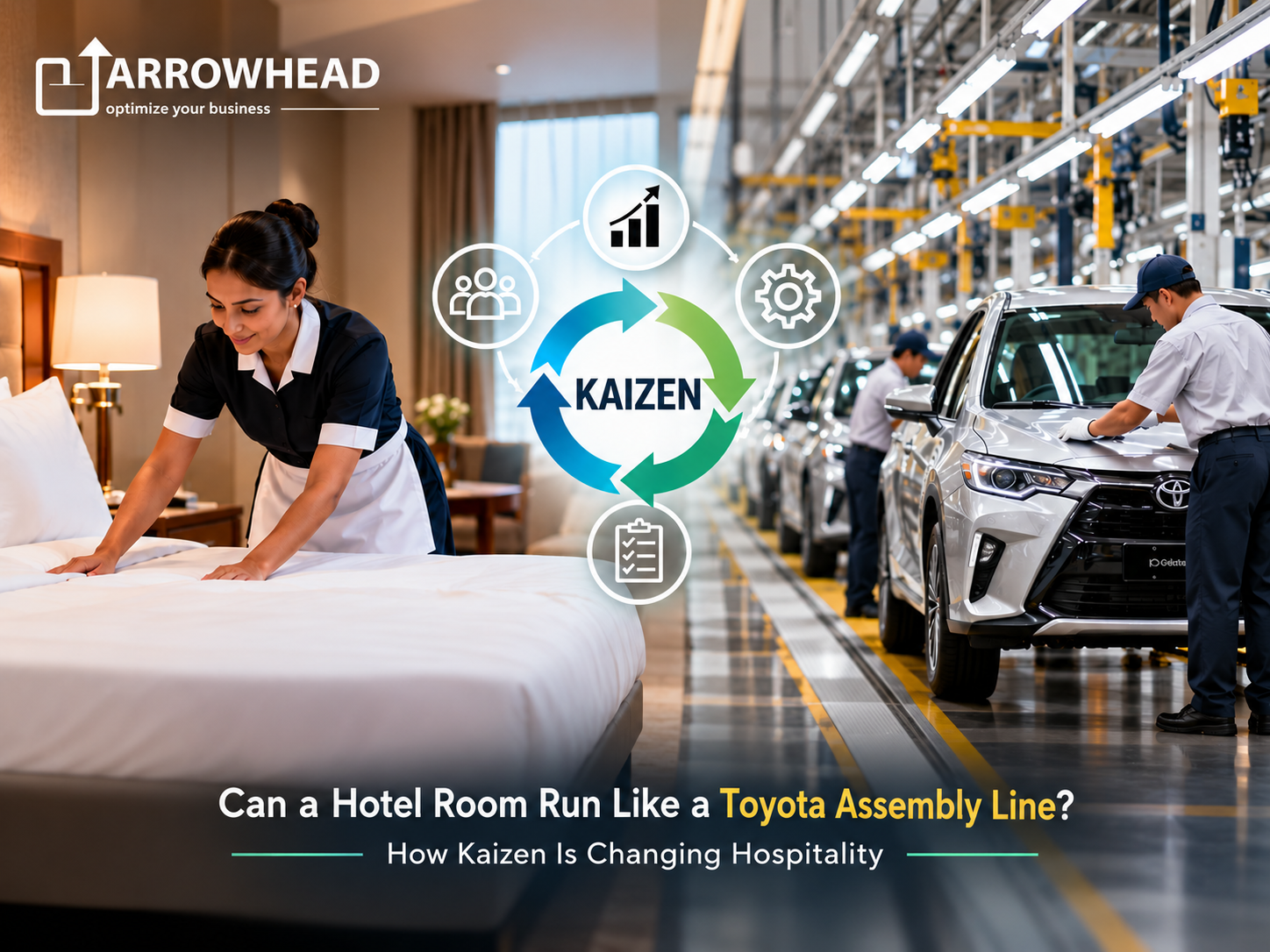
Kaizen in hotels encourages teams to examine how work is performed, identify unnecessary effort and make practical improvements. Rather than treating every problem as an unavoidable operating expense, teams learn to question whether they can improve the process.
The objective is not simply to cut costs. It is to use resources more effectively while maintaining the standards that define luxury hospitality.
Restaurants: Better Flow Without Compromising Quality
Consider a hotel’s fine-dining restaurant.
Guests expect attentive service, carefully prepared dishes and a memorable dining experience. Behind the scenes, however, the restaurant must manage ingredient availability, food preparation, kitchen coordination, table turnover and staff allocation.
If ingredients are frequently overstocked or expire before use, the restaurant loses money. If kitchen staff repeatedly move between poorly organised workstations, preparation takes longer. If reservations and kitchen capacity are not coordinated, guests may experience delays during peak hours.
Kaizen offers a practical way to investigate these issues.
Teams can review food-waste patterns, improve ingredient storage, organise workstations and refine communication between the kitchen and service staff. Even a small improvement in preparation flow or inventory management can make a difference when repeated across hundreds of service periods.
This is what continuous improvement in hotels looks like in practice: finding ways to make everyday operations more reliable without asking employees to sacrifice quality or rush the guest experience.
Spas, Golf and Tennis: Making Facilities Work Smarter
Luxury facilities often require significant investment in equipment, space, maintenance and skilled personnel. Their performance depends not only on the quality of the experience but also on how effectively these resources are managed.
Take a hotel spa. Poorly coordinated appointments may leave therapists waiting at one time and overbooked at another. Missing supplies can interrupt treatments, while delayed room preparation may affect the next appointment.
Kaizen can help the team review appointment patterns, improve supply replenishment and establish clearer preparation routines.
The same thinking applies to tennis courts and golf facilities. Equipment availability, maintenance schedules, instructor bookings and player coordination all affect the experience. If maintenance is reactive rather than planned, facilities may become unavailable precisely when guests want to use them.
By identifying recurring issues and improving how work is organised, hotels can reduce avoidable disruption and use their existing resources better.
These improvements may happen behind the scenes, but guests notice the difference when facilities are ready, appointments begin on time, and services run smoothly.
Sightseeing, Shows and Childcare: The Importance of Coordination
Some of the most memorable hotel experiences happen outside the guest room.
A concierge may arrange a local sightseeing trip. Another team may coordinate show tickets. Families may rely on supervised children’s activities while they enjoy other facilities.
These services involve several moving parts: bookings, transportation, timings, staff availability, guest preferences and communication with external providers.
A delay in one area can affect the entire experience. A late sightseeing vehicle can disrupt the day’s schedule. Incorrect booking information may create confusion at a show. Poor coordination between childcare bookings and staffing can create avoidable pressure on the team.
Kaizen in the hospitality industry encourages hotels to examine these handoffs rather than treating every disruption as an isolated incident.
Clearer booking processes, standardised confirmations, better schedule visibility, and more reliable communication can reduce errors while allowing employees to deliver personalised service.
The goal is to make the experience feel effortless for the guest, even when several teams work behind the scenes.
One Guest Experience, Many Departments
One of the biggest challenges in a luxury hotel is that departments may optimise their own operations without considering the wider guest journey.
A restaurant may manage its kitchen efficiently but fail to coordinate with the concierge when guests arrive for a pre-booked experience. A spa may run on schedule, but a delayed transfer may cause guests to miss their appointments. A room may be ready, but the amenities the guest requested may remain unavailable.
These are not always departmental failures. Sometimes, they stem from breakdowns in communication between departments.
This is where continuous improvement in hotels needs to extend beyond individual teams. Managers must understand how information, people and resources move across the property.
Regular cross-functional reviews can help teams identify recurring handoff problems, agree on responsibilities and address the causes of delays.
A structured kaizen consultancy approach can support this work by helping organisations examine processes systematically, involve employees and prioritise improvements based on their operational and customer impact.
Luxury Standards Must Remain Non-Negotiable
There is an important distinction between improving efficiency and reducing the quality of service.
Luxury hospitality depends on personal attention, flexibility and the ability to respond to individual needs. Applying Kaizen should never make every interaction rigid or reduce the time employees spend with guests just to meet a target.
Instead, focus on removing unnecessary work that gets in the way of good service.
When employees spend less time searching for supplies, correcting booking errors or resolving avoidable coordination problems, they have more time to focus on guests.
Standardised processes can provide behind-the-scenes consistency while leaving room for personalisation at the front.
That is the real value of Kaizen in hotels: better operations that support the guest experience rather than restrict it.
How ARROWHEAD Consulting Can Support Continuous Improvement
At ARROWHEAD Consulting, Lean-led thinking and structured problem-solving help organisations examine their processes and identify opportunities for sustainable improvement.
For a luxury hotel, this means looking beyond a single department or cost centre. The opportunity lies in understanding the relationships between restaurants, wellness facilities, recreational activities, guest services and the teams that support them.
Kaizen provides a practical starting point: identify a recurring problem, understand its cause, test an improvement and check whether it delivers the intended result. Where problems require deeper analysis, Lean Six Sigma tools can support data-based decisions and root-cause investigation.
A thoughtful kaizen consultancy approach keeps improvement grounded in hospitality realities rather than applying manufacturing practices without considering the service environment.
The Real Meaning of Luxury Efficiency
A five-star or seven-star property does not need to choose between exceptional service and efficient operations.
It needs to make sure the two support each other.
When restaurants manage waste more effectively, spas coordinate appointments smoothly, recreational facilities remain available, and guest activities are properly organised, the benefits extend beyond individual departments. Employees face fewer avoidable problems, use resources more effectively, and guests experience a more seamless stay.
That is the promise of Kaizen in the hospitality industry.
Luxury is not simply about offering more facilities. It is about ensuring that every facility works together to deliver the experience guests expect.
And when continuous improvement becomes part of everyday operations, the result is not just a more efficient hotel. It is a hotel that can deliver exceptional experiences more consistently, while making better use of the people, time and resources behind them.