
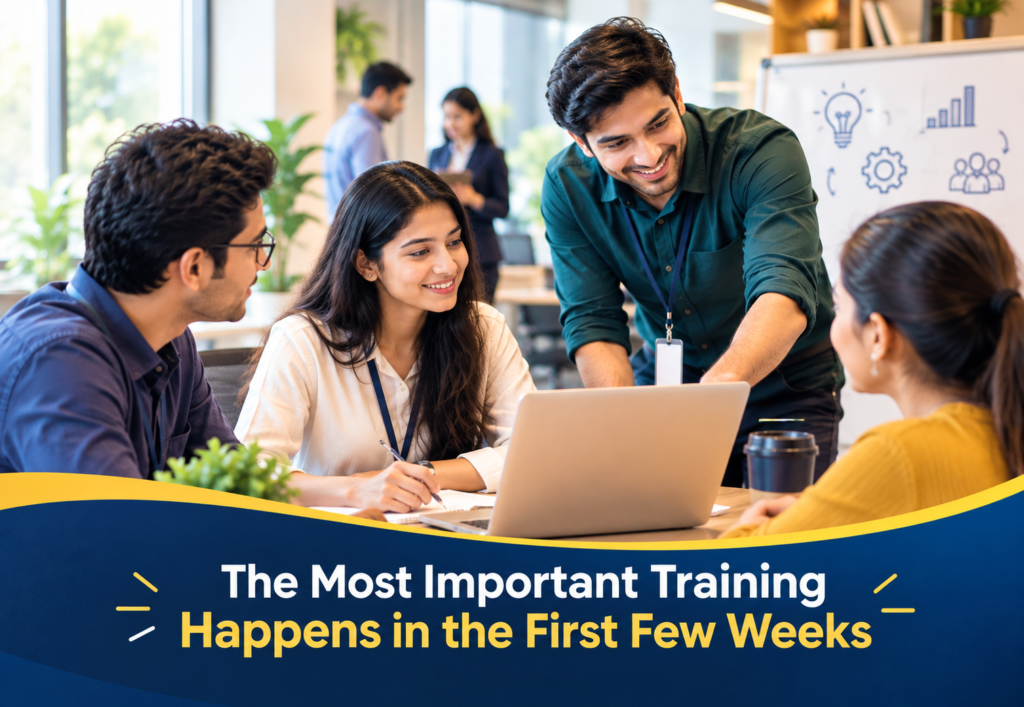
When organisations talk about employee training, the conversation often focuses on managers, senior leaders, or employees already in key roles.
But there is another group that may need training just as much, if not more:
The people who have just joined the organisation.
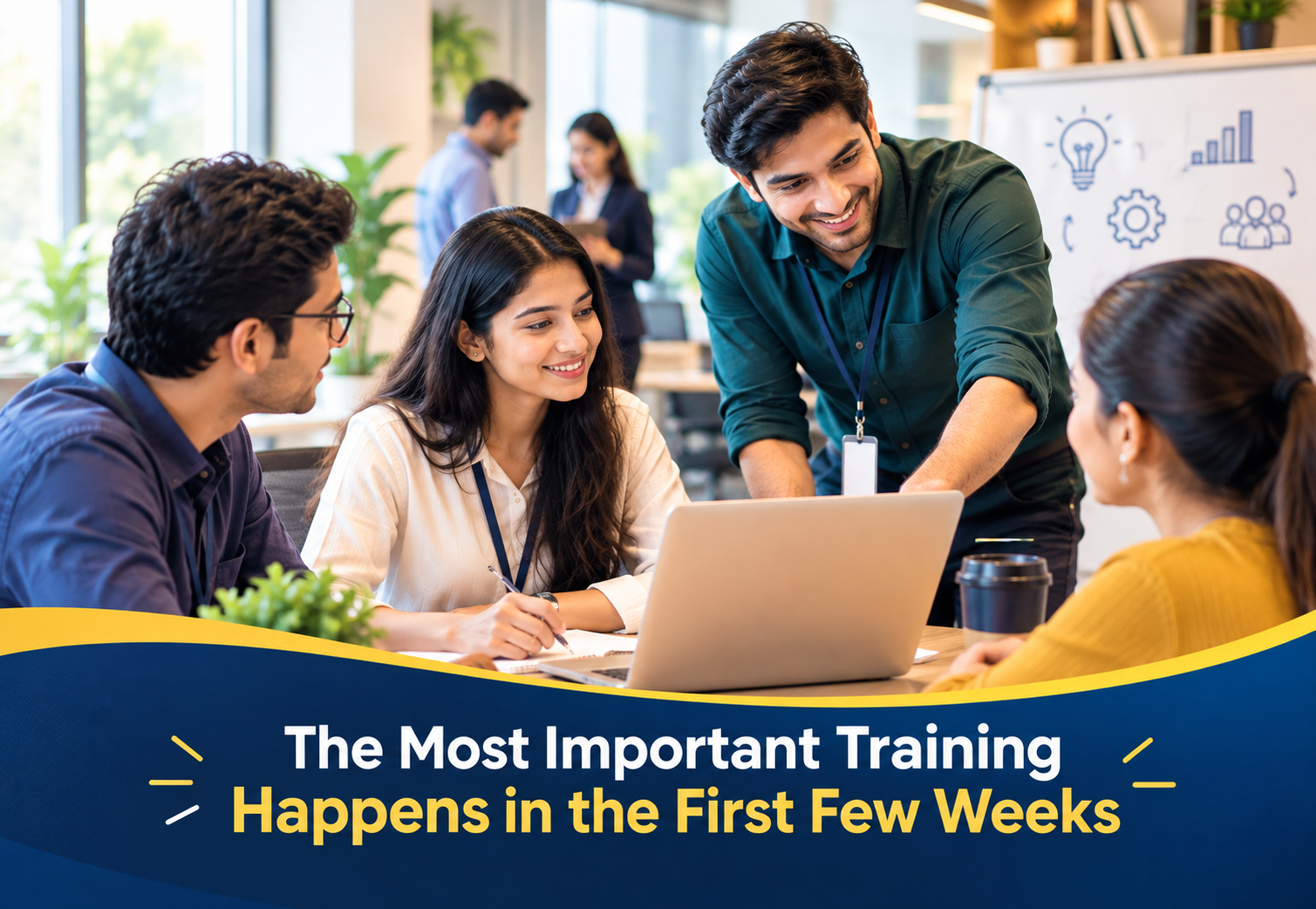
The first few weeks of a new employee’s journey are not simply about completing paperwork, understanding company policies or meeting colleagues. This is when employees begin learning how work actually gets done.
They observe how people communicate. They learn how processes work. They understand what is expected from them. And, importantly, they start developing habits.
That makes the first few weeks an important window for training.
If organisations want employees to follow the right processes, think about quality, solve problems, and work effectively with others, they should introduce these expectations from the beginning, not years later.
The First Few Weeks Shape How People Work
Every new employee starts with a learning mindset.
They are trying to understand the organisation, their role and the people around them.
This is an opportunity for organisations to establish the right foundation.
Imagine a new employee joining a manufacturing organisation.
If they are immediately shown not just what to do but why the process exists, what quality means, where waste can occur, and how problems should be reported, they start understanding the organisation differently.
Similarly, in an office environment, a new employee can be introduced to effective communication, documentation, problem-solving, customer expectations and cross-functional collaboration from day one.
These early lessons can become part of their normal way of working.
Training Should Not Begin Only When There Is a Problem
A common approach is to train employees when a gap becomes visible.
Someone makes repeated mistakes, a process changes, performance drops, or a manager identifies a capability issue.
Training then becomes a corrective action.
But another approach is to build capability before the gap becomes a problem.
Early training can help employees understand expectations before they develop their own ways of doing things.
This is particularly important for organisations focused on operational excellence.
If employees learn the importance of standardised work, process discipline, quality and structured problem-solving early, these concepts become part of how they approach their roles.
New Employees Bring More Than Experience
A new employee may have several years of experience in their previous organisation.
But every organisation has its own processes, customers, systems, culture and expectations.
Previous experience is valuable, but it does not automatically mean the employee knows how things should be done in the new environment.
That is why onboarding should go beyond:
- Company policies
- HR processes
- Software access
- Job descriptions
- Reporting structures
Employees also need to understand how the organisation thinks and works.
What does quality mean here?
How are problems escalated?
How should teams collaborate?
What happens when a process does not work?
How are decisions made?
What behaviours are encouraged?
What does continuous improvement look like?
These questions help employees understand the organisation beyond their individual job description.
Introduce Lean Thinking Early
For organisations that follow Lean principles, introducing Lean thinking early in an employee’s journey can be particularly valuable.
Employees do not necessarily need to become improvement experts immediately.
But they can learn to recognise basic principles such as:
What creates value?
What is waste?
Why does standardisation matter?
How do we identify problems?
Why should we understand the root cause instead of simply fixing the symptom?
This creates a common language across the organisation.
Over time, employees can build on this foundation through more advanced Lean Six Sigma training and practical improvement projects.
For a Lean consultant in India, capability building should therefore not only focus on experienced managers or improvement teams. It should also help organisations create a workforce that understands improvement from the ground up.
Soft Skills Matter From Day One Too
Technical training helps employees perform their roles.
But new employees also need to learn how to work with people.
A technically capable employee may still struggle if they cannot communicate effectively, collaborate with other departments, or handle difficult conversations.
That is why early training can include skills such as:
- Communication
- Teamwork
- Problem-solving
- Time management
- Critical thinking
- Customer interaction
- Leadership fundamentals
- Collaboration
These skills become increasingly important as employees take on more responsibility.
If organisations wait until someone becomes a manager to develop these capabilities, they may miss an opportunity to build stronger habits much earlier.
Training Creates Confidence
Starting a new job can be overwhelming.
Employees learn new systems, processes, people, and expectations at the same time.
Good training can reduce that uncertainty.
When people understand what is expected of them and have the skills to do their work, they are more likely to ask questions, partake in discussions, and take ownership.
This matters because confidence and capability often reinforce each other.
The more employees understand, the more confidently they can contribute.
And the earlier that foundation is established, the easier it becomes for them to grow within the organisation.
Training Should Continue Beyond Onboarding
Of course, the first few weeks should not be the only time an employee receives training.
Early training builds a foundation.
As employees progress, their learning should evolve with their responsibilities.
A new employee may begin with role-specific knowledge, communication skills, and a basic understanding of processes.
Later, they may need deeper problem-solving skills, Lean Six Sigma capability, leadership development, data analysis or change-management skills.
This creates a continuous learning journey rather than treating training as a one-time event.
Training Different Levels for Different Needs
Not every employee needs the same training.
A shop-floor employee, team leader, middle manager, and senior executive may face very different challenges.
But that doesn’t mean training should be reserved for higher levels.
A strong capability-building strategy develops people at different stages of their organisational journey.
Senior leaders may need strategic leadership and transformation capabilities.
Middle management may need problem-solving, decision-making and team-management skills.
New employees may need process understanding, communication, quality awareness and foundational improvement skills.
The objective is to create capability across the organisation, not just at the top.
From Training to Organisational Capability
The real question organisations should ask is not:
“Who should we train?”
It is:
“What capabilities do we need at each level of the organisation?”
This changes the way training is viewed.
Training is no longer just a programme conducted when someone gets promoted or when performance drops.
It becomes a deliberate way to build organisational capability.
At ARROWHEAD Consulting, this approach is reflected in its training portfolio of 21 topics, covering a combination of technical subjects and essential soft skills.
Certified Lean Six Sigma Black Belts or Master Black Belts conduct the sessions, bringing structured improvement thinking and practical experience into the learning process.
This lets organisations build capability across levels, rather than limiting development to middle management and senior leadership.
The Earlier You Build the Foundation, the Stronger It Becomes
A new employee does not need to know everything in their first week.
But they should begin learning the right things.
The first few weeks are an opportunity to establish expectations, introduce the organisation’s way of working and help employees develop the skills they need to contribute effectively.
Training at this stage is not about overwhelming people with information.
It is about giving them the right foundation and then building on it over time.
Organisations do not become stronger simply because their senior leaders are highly trained.
They become stronger when people at every level have the knowledge, skills and mindset to do their work well and continuously improve it.
And sometimes, the most important training an organisation can provide begins on the very first day a new employee walks through the door.