
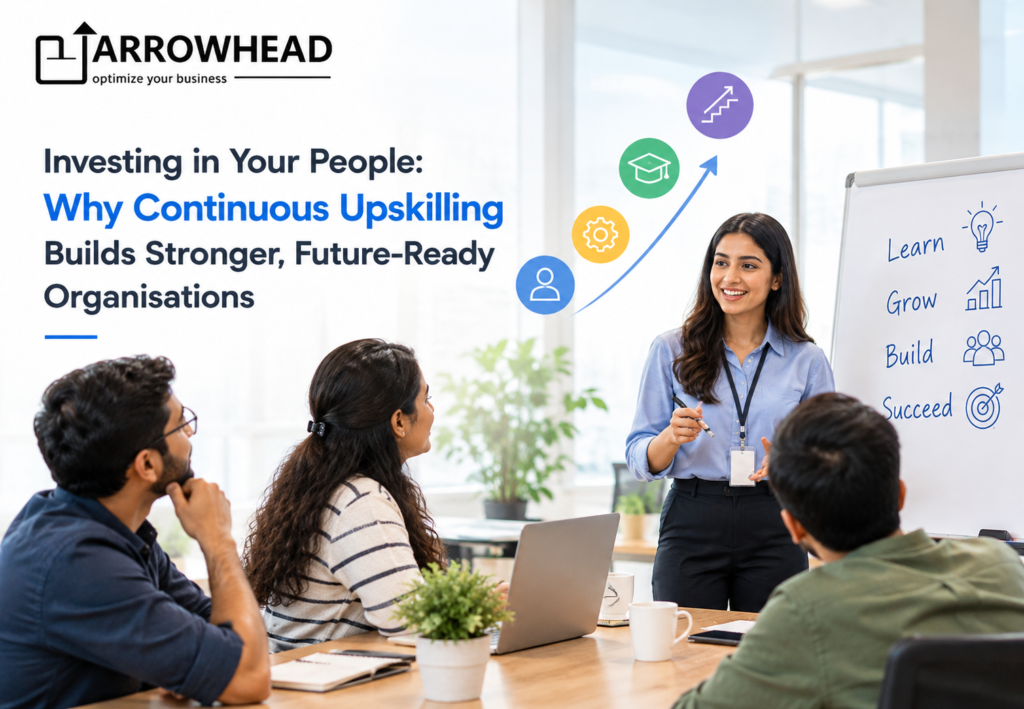
Businesses invest heavily in technology, infrastructure, automation and new systems. But there is one investment that often determines whether these improvements actually deliver results: people.
A new technology is only as effective as the people using it. A new process only works when teams understand it. And a new strategy can only succeed when employees have the skills and confidence to execute it.
That is why continuous upskilling is becoming less of an HR initiative and more of a business necessity.
The skills businesses need today are changing quickly. Technical knowledge matters, but so do communication, problem-solving, leadership, collaboration, analytical thinking, and the ability to adapt.
Future-ready organisations are built by developing future-ready people.
Skills Cannot Stay Static
The workplace is changing faster than ever.
New technologies are changing how tasks are performed. AI is influencing decision-making and automation. Customer expectations are evolving. Processes are becoming more connected and data-driven.
This means the question businesses need to ask is no longer just:
“Does our team know how to do the job?”
It is:
“Does our team have the skills to do the job better as the business changes?”
An employee who was highly effective five years ago may now need to work with new software, understand new data sources or collaborate differently with other teams.
Continuous learning helps organisations stay ahead of these changes instead of reacting to them after they become problems.
Upskilling Is Not Just About Technical Skills
When people hear the word “upskilling”, they often think about technical training.
And yes, technical capability is important.
Employees may need to learn new software, digital tools, AI applications, equipment, analytics platforms or industry-specific skills.
But technical expertise alone does not create a high-performing team.
Imagine an employee who can analyse complex data but cannot explain the findings to the rest of the team.
Or a manager who understands operational metrics but struggles to align different departments around a common problem.
The organisation needs both technical capability and human capability.
That means developing skills such as:
- Problem-solving
- Communication
- Leadership
- Critical thinking
- Collaboration
- Decision-making
- Change management
- Analytical thinking
- Digital and AI literacy
When these skills come together, employees can do more than complete their responsibilities. They can contribute to improving how the organisation works.
Where Lean Six Sigma Fits In
For organisations focused on operational excellence, capability building can also include Lean Six Sigma.
Lean thinking helps employees identify waste, simplify processes, improve flow and focus on what creates value for the customer.
Six Sigma tools can support this by helping teams analyse data, understand variation and identify root causes.
The real value, however, is not simply knowing the tools.
It is changing how employees approach problems.
Instead of asking:
“Who made the mistake?”
teams can start asking:
“What in the process allowed this mistake to happen?”
That shift encourages people to look beyond symptoms and work towards sustainable improvement.
For organisations working with a Lean consultant in India, this is an important part of capability building. Training should help employees apply structured thinking to real business challenges, whether that means reducing rework, improving handoffs, cutting delays, or solving recurring customer complaints.
Why Upskilling Makes Business Sense
Continuous upskilling can create benefits that go well beyond employee development.
Better Problem-Solving
Employees with structured problem-solving skills are less likely to rely entirely on assumptions or quick fixes. They can investigate issues, understand causes, and make better decisions.
Higher Productivity
When people understand their processes, they are more likely to spot unnecessary steps, duplication, waiting time, and other forms of waste.
Small improvements made consistently can create a significant impact over time.
Faster Adaptation
Change is unavoidable. Organisations need employees who can learn new systems, take on new responsibilities and adapt to changing business requirements without constantly depending on external support.
Stronger Employee Engagement
People are more likely to feel valued when organisations invest in their growth.
Upskilling also creates opportunities for employees to take on greater responsibilities and build long-term careers within the organisation.
Stronger Internal Capability
External experts can bring valuable knowledge and perspective, but organisations also need people internally who can sustain improvements.
That is one of the biggest benefits of capability building: the organisation becomes less dependent on individual experts and better equipped to improve from within.
Soft Skills Can Have Hard Business Impact
Some organisational problems are not caused by a lack of technical knowledge.
They happen because teams do not communicate effectively.
Sales may promise something operations cannot deliver. Planning may not share information on time. Finance may not have visibility into an operational issue. Two departments may have different priorities even though they are working towards the same business goal.
These are capability gaps too.
Communication, collaboration, leadership and stakeholder management may be called “soft skills”, but their impact on productivity, customer experience and business performance can be very real.
A technically skilled employee who can also collaborate effectively across departments can create far greater value for the organisation.
From Training to Application
One common mistake is measuring training only by attendance.
The fact that 50 employees completed a programme does not necessarily mean the organisation improved.
The better questions are:
What changed after the training?
Are employees solving problems faster?
Are teams collaborating better?
Has rework reduced?
Are processes simpler?
Are managers making better decisions?
Are employees taking greater ownership?
This is where training becomes capability building.
For a Six Sigma company in Mumbai or organisations working with Six Sigma Consultants in India, the objective should not simply be to teach employees improvement terminology or tools.
The goal should be to create people who can think critically, solve problems, and turn learning into measurable improvement.
Preparing People for an AI-Driven Workplace
AI is changing the way organisations work, but preparing for the future is not simply about implementing AI tools.
Employees also need to know how to work with them.
They need to understand how to use AI responsibly, evaluate its outputs, ask better questions, and combine technology with human judgement.
This makes continuous learning even more important.
The organisations that invest in developing these capabilities today will be better prepared to adopt tomorrow’s technologies without creating unnecessary disruption.
Building a Learning Culture
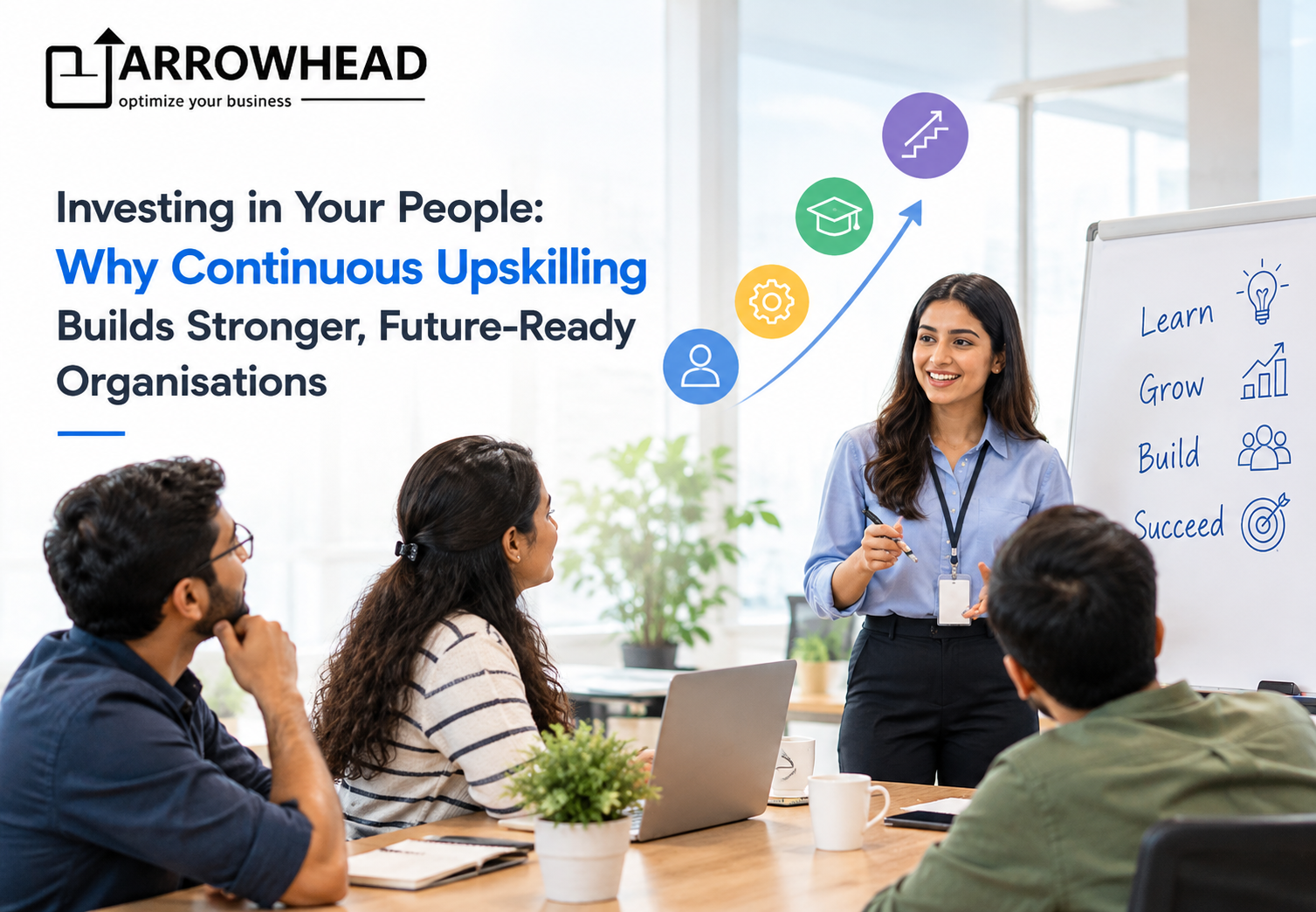
Continuous upskilling should not be limited to an annual training calendar.
It needs to become part of the organisation’s culture.
Employees should have opportunities to learn, experiment, share knowledge and apply new skills to real problems. Leaders need to encourage curiosity and recognise people who contribute to improvement.
At ARROWHEAD Consulting, capability building is approached as part of sustainable transformation.
ARROWHEAD offers 21 training topics designed to build a well-rounded workforce, combining technical topics with essential soft skills. This allows organisations to develop not only process and problem-solving capabilities, but also the communication, leadership and collaboration skills needed to put those capabilities into practice.
Importantly, all ARROWHEAD training sessions are conducted by certified Lean Six Sigma Black Belts or Master Black Belts, bringing structured methodology, practical experience and real-world application into the learning environment.
The focus is not simply on conducting training programmes. It is on helping organisations develop people who can apply Lean Six Sigma thinking, problem-solving, analytical skills, leadership and collaboration to real operational challenges.
Because sustainable improvement cannot depend on a handful of specialists.
It needs people across the organisation who understand their processes, recognise problems and can improve them.
The Best Investment Is in People
No organisation can predict exactly what its industry, technology or workplace will look like five years from now.
But it can prepare its people to adapt.
Continuous upskilling helps employees learn faster, solve better, collaborate more effectively and take greater ownership of improvement.
Technology may create new possibilities. Data may provide new insights. Processes may provide structure.
But people turn all of these into results.
And when organisations consistently invest in their people, they are not just building better employees.
They are building an organisation that can learn, adapt and improve continuously.
That is what makes a business truly future-ready.